
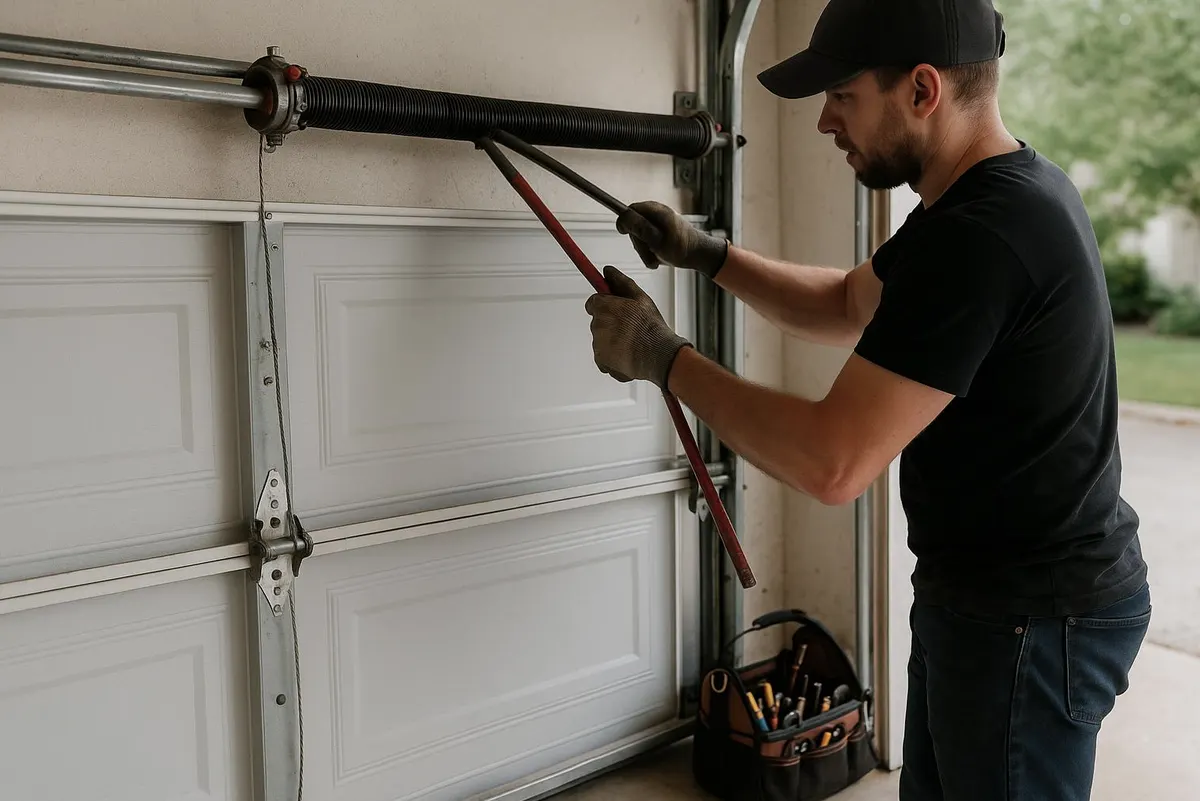
The short answer: your garage door is the largest, weakest opening in your home's exterior, and high wind exploits that
A standard garage door covers more square footage than any other opening in a house, yet it's held in place by a handful of rollers, hinges, and a track system that was never designed to resist sustained wind pressure or the sudden gusts that come with a nor'easter. When wind pushes against a house, the garage door often flexes and buckles before a window or wall would. Once it fails, wind gets inside the structure and pushes up on the roof from underneath, which is how a storm turns a garage door problem into a roof problem. Reinforcing the door isn't optional in exposed areas near the water or on open blocks where wind funnels between buildings.
Why older Brooklyn doors are especially vulnerable
Brooklyn's housing stock includes a lot of original garage doors, some installed decades ago with lighter-gauge steel, wood panels, or minimal bracing. These doors were built for an older set of weather expectations. Add in years of freeze-thaw cycling, road salt corrosion on hardware, and small dents or warps that have accumulated over time, and you have a panel that's already weaker than it looks. A door that closes and opens fine on a calm day can still fail under 60-70 mph gusts if the track is slightly bent or the panels have lost their rigidity.
Signs your door is at higher risk
- Visible daylight gaps around the edges when the door is closed
- Panels that flex or bow when you push on them from outside
- Rust or pitting on the tracks, hinges, or rollers
- A door that shudders or rattles in moderate wind already
- Weatherstripping that's cracked, flattened, or missing sections
Steps to take before the next big storm
1. Check and tighten the hardware
Hinges, roller brackets, and track bolts loosen over time from normal use and vibration. A wrench pass over every visible bolt takes fifteen minutes and immediately reduces how much a panel can shift under pressure.
2. Inspect the tracks for bends
Even a slight bend in the vertical track can let the door pop off its rollers under wind load. Sight down the track from the bottom; it should run perfectly straight and parallel to the frame on both sides.
3. Consider a wind brace retrofit
Horizontal struts can be added to the back of most steel panel doors to stiffen them against wind pressure. This is a common upgrade for exposed properties and is far less disruptive than a full door replacement.
4. Test the auto-reverse and opener connection
During a storm, you want your opener to function reliably if you need to close the door quickly or reinforce it from inside. A sticking opener or a worn drive belt is the wrong thing to discover mid-storm.
5. Replace worn weatherstripping and bottom seals
Beyond keeping out wind-driven rain, a tight seal keeps the door's bottom edge from catching wind underneath it, which is one of the main ways a panel starts to lift and buckle.
During the storm itself
- Keep the door fully closed; a door that's even slightly open gives wind a surface to grab
- Don't park a vehicle against the inside of the door expecting it to brace the panel; that can damage both the car and the door if it buckles
- If you lose power, know how to operate the manual release safely so you're not stuck if the opener fails
After the wind passes
Walk around the exterior and look for bent panels, popped rollers, or a track that's pulled away from the frame, even if the door still opens and closes. Hidden damage from one storm often becomes the failure point in the next one, so it's worth catching early rather than waiting for a second event to finish the job.
When to call Brooklyn Garage Door
If your door has visible flex, rust on the hardware, or gaps you can see daylight through, that's worth a call before the next weather system moves through, not after. Brooklyn Garage Door handles garage door maintenance visits that check tracks, hinges, and seals for storm readiness, and garage door repair for doors that have already taken wind or impact damage. For older doors that are too far gone to reinforce reliably, we also talk through garage door installation options built for the freeze-thaw and wind conditions this area actually sees.
If your garage door hasn't been checked since last season, call Brooklyn Garage Door and get it storm-ready before the next nor'easter rolls through Brooklyn, NY.